Personal Injury Blog
Who Can Be Held Liable in a Trucking Accident Case?

Gerald Clark Brooks, Jr.
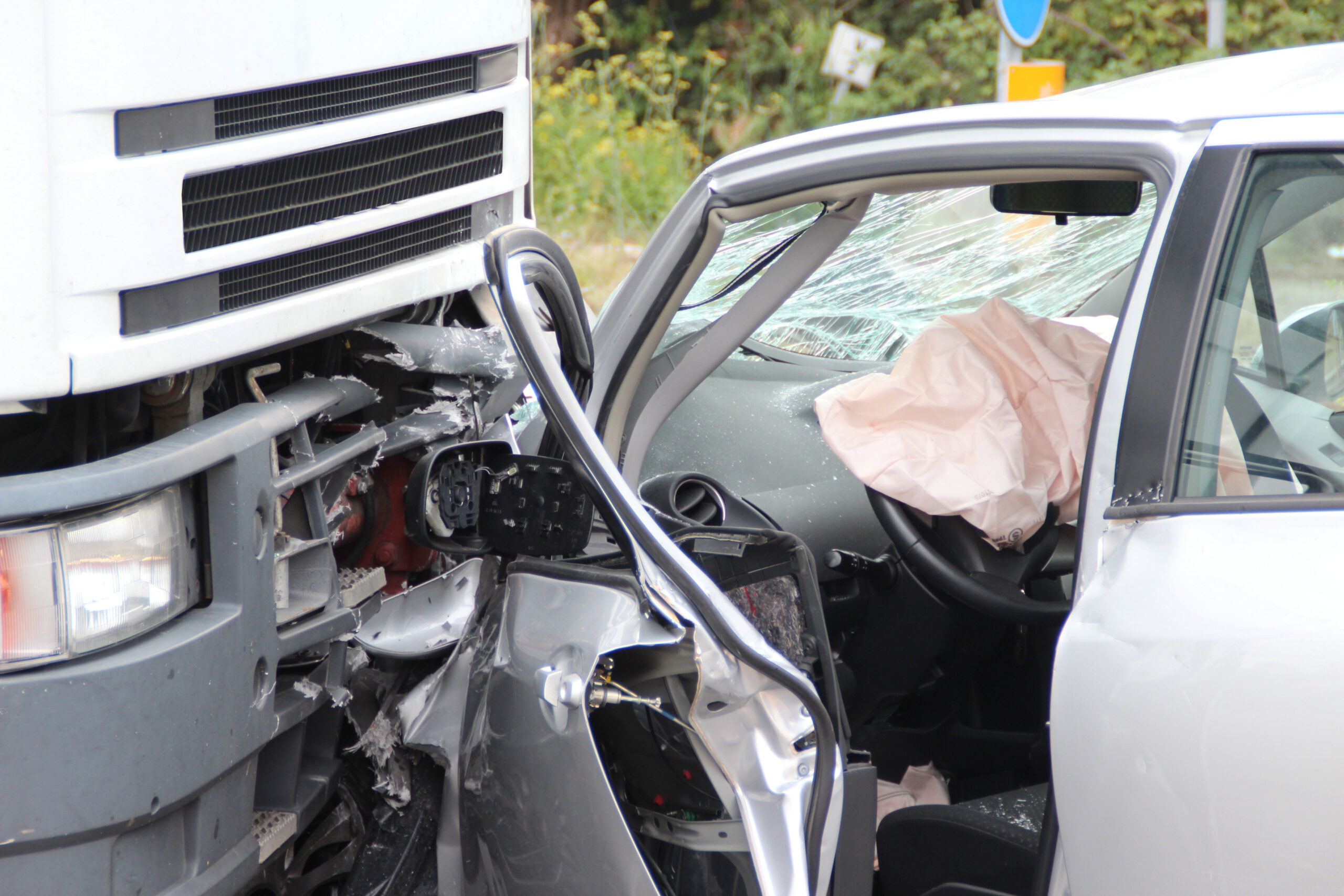
A collision involving a commercial truck is not like a typical car accident. The sheer size and weight of an 18-wheeler (sometimes up to 80,000 pounds fully loaded) mean these crashes cause catastrophic injuries, and the legal questions that follow are far more complex. Unlike standard car accidents, where liability usually falls on one driver, truck accident liability can extend to multiple parties, including the driver, the trucking company, vehicle manufacturers, cargo loaders, and third-party contractors.
Understanding who bears responsibility in your case is not just an academic exercise. It directly determines how much compensation you may be entitled to and from which sources that compensation can be recovered. Each party involved in a trucking operation typically carries separate insurance coverage, which means identifying every liable party can significantly increase the total amount available to you.
In this guide, we’ll break down the key parties who may be held responsible after a truck crash, the legal theories that support each claim, and how an experienced attorney can help you hold them accountable. If you have been injured in a trucking accident, our truck accident lawyers are ready to fight for the compensation you deserve.
Why Truck Accident Liability Is More Complex
Multiple Parties May Share Responsibility
Commercial trucking is not a simple one-driver operation. A single shipment might involve a trucking company that owns the vehicle, a separate driver who operates it, a freight broker who arranged the load, a third-party maintenance shop that last serviced the brakes, and a cargo loading company that secured the freight. Any one of these parties, or several of them, may have contributed to the conditions that caused your accident.
When more than one party is negligent, the legal concept of joint and several liability may apply in certain jurisdictions. Under this doctrine, each party found responsible can potentially be held liable for the full amount of the plaintiff’s damages, not just their proportional share. This matters in practice because if one defendant lacks the resources to pay a judgment, others may be required to cover the shortfall.
Federal and State Regulations Play a Role
The commercial trucking industry is governed by an extensive body of federal regulations enforced by the Federal Motor Carrier Safety Administration (FMCSA). These regulations cover everything from how many hours a driver may operate a vehicle to how frequently a truck must be inspected and maintained. When a driver, company, or other party violates these standards, that violation can serve as powerful evidence of negligence in a truck accident lawsuit.
For example, FMCSA Hours of Service (HOS) regulations limit property-carrying commercial drivers to 11 hours of driving within a 14-hour on-duty window after taking 10 consecutive hours off-duty, with a mandatory 30-minute break after 8 cumulative driving hours. A driver who exceeds those limits and then causes a crash has violated federal law and handed an injured victim compelling evidence that fatigue played a role in the accident.
State regulations layer additional requirements on top of federal law. Alabama and Georgia both enforce their own commercial vehicle standards, and violations of either state or federal rules can establish or strengthen liability against any responsible party.
The Truck Driver’s Liability
Driver Negligence
The truck driver is often the first person examined when determining who caused an accident, and for good reason. Driver error is a contributing factor in a significant percentage of commercial truck crashes. Common examples of driver negligence include:
- Speeding or driving too fast for road conditions
- Distracted driving, including cell phone use
- Fatigued or drowsy driving after exceeding hours-of-service limits
- Driving under the influence of alcohol or drugs, including stimulants, sometimes used to stay awake
- Tailgating or aggressive driving
- Failure to check blind spots before changing lanes or merging
To prove driver negligence in a truck accident case, an injured party must general establish four elements:
- The driver owed a duty of care to others on the road
- The driver breached that duty through their actions or inaction
- The breach directly caused the accident
- The accident caused the plaintiff’s damages
In practice, evidence such as black box data, cell phone records, toxicology results, and eyewitness accounts all help establish these elements.
Violations of Safety Regulations
A truck driver who violates federal safety regulations creates legal exposure for themselves as well as their employer. Common regulatory violations that contribute to accidents include:
- Driving beyond the FMCSA’s legal hours-of-service limits
- Failing to conduct required pre-trip and post-trip vehicle inspections
- Operating a vehicle with known defects that should have been reported
- Falsifying electronic logging device (ELD) records to conceal excess hours
- Ignoring posted weight limits or load securement requirements
These violations are especially significant because they constitute a breach of standards designed specifically to prevent accidents. When a driver cuts corners on safety protocols, the consequences can be devastating, and the paper trail left behind by ELD records, inspection logs, and dispatch communications can make these violations provable in court.
The Trucking Company’s Liability
Vicarious Liability
Trucking companies face liability for their own decisions and the actions of their drivers. Under the legal doctrine of vicarious liability, an employer can be held responsible for the negligent acts of an employee who was acting within the scope of their employment at the time of the accident.
In the context of trucking, this means that if a truck driver causes a crash while hauling freight for their employer, the company is automatically liable for that driver’s negligence, even if the company itself did nothing wrong. You do not need to prove the company was careless in its own right; you simply need to establish that the driver was an employee (not an independent contractor) and was performing job-related duties at the time.
The distinction between employee and independent contractor status is important. Trucking companies sometimes classify drivers as independent contractors to limit their liability. However, courts look at the reality of the working relationship, including who controls the driver’s schedule, equipment, and routes, rather than how the company labels it.
Negligent Hiring or Training
Beyond vicarious liability, a trucking company can be held directly responsible for its own negligent decisions. Negligent hiring claims arise when a company puts a driver behind the wheel without properly vetting their qualifications, driving history, or safety record. Examples include:
- Hiring a driver with a history of DUIs, serious traffic violations, or prior accidents
- Failing to verify that a driver holds a valid commercial driver’s license (CDL)
- Ignoring red flags revealed in background checks or drug and alcohol screenings
Similarly, a trucking company can be liable for negligent training if it fails to adequately prepare drivers for the demands of commercial operation. Proper training should cover safe driving techniques, hours-of-service compliance, cargo securement procedures, and how to operate specific vehicle types safely. When companies skip or shortcut this process to get drivers on the road faster, they create foreseeable risks.
Failure to Maintain Vehicles
Federal regulations require trucking companies to implement systematic vehicle inspection, repair, and maintenance programs. A company that ignores these obligations, such as allowing brakes to degrade, tires to wear beyond safe limits, or lighting systems to fail, is putting every driver on the road in danger.
Poor maintenance practices can give rise to direct negligence claims against the company, separate from any claim against the driver. Maintenance records, or the conspicuous absence of them, are often key evidence in these cases. A truck that was never properly serviced is a foreseeable consequence of a company’s decision to cut costs at the expense of safety.
Liability of Manufacturers and Third Parties
Defective Truck Parts
Sometimes a truck accident has less to do with driver behavior or company policy and more to do with the equipment itself. Commercial trucks are complex machines with thousands of components, and a failure in any critical system can trigger a catastrophic crash. When a defective part causes or contributes to an accident, the manufacturer of that part may be held liable under product liability law.
Common product liability claims in truck accidents involve:
- Faulty brake systems that fail to stop the vehicle in time
- Defective tires that blow out at highway speeds
- Steering system failures that cause the driver to lose control
- Malfunctioning lighting or reflective equipment
- Failures in advanced driver-assistance systems (ADAS)
Product liability claims do not require proof that the manufacturer was negligent in the traditional sense. Under a strict liability theory, a manufacturer can be held responsible simply for placing a defective product into the stream of commerce that caused injury, regardless of whether they exercised reasonable care in the design or manufacturing process.
Maintenance Contractors
Many trucking companies outsource maintenance and repair work to third-party service providers. When those providers perform substandard work, like missing obvious defects, installing incorrect parts, or failing to complete a repair properly, they may bear liability for accidents that result from those failures.
For example, if a third-party brake shop services a semi-truck’s braking system negligently and the brakes then fail, causing a collision, that maintenance contractor could be named as a defendant alongside the trucking company. Their liability does not diminish the trucking company’s responsibility, which has an independent duty to ensure its vehicles are roadworthy.
Cargo Loaders and Shippers
The way freight is loaded onto a commercial truck has a direct bearing on how safely it handles on the road. Cargo that is improperly loaded, inadequately secured, or overweight can shift during transit, throwing a truck off balance or causing a rollover, especially during turns or emergency maneuvers.
When cargo loading companies or shippers are responsible for this type of negligence, they can be named as defendants in a truck accident lawsuit. Evidence in these cases often includes shipping documentation, weight manifests, and photographs of the cargo or loading area taken at the time of the accident or shortly afterward. A driver who was forced to carry an improperly loaded shipment may share partial liability, but so too may every party in the chain who knew, or should have known, about the hazard.
How Liability Is Proven in a Truck Accident Case
Evidence Used in Truck Accident Cases
Building a successful truck accident liability claim requires assembling a comprehensive body of evidence. Unlike standard car accidents, commercial trucking crashes generate a substantial paper and data trail that experienced attorneys know how to access and preserve. Key evidence sources include:
- Electronic Logging Device (ELD) data): Federal law requires most commercial trucks to use ELDs that automatically record driving hours, rest periods, and vehicle speed. This data can reveal hours-of-service violations and pinpoint the driver’s exact activity leading up to the crash.
- Driver logs and dispatch records: Even with ELDs, handwritten logs, dispatch communications, and trip reports can reveal pressure on drivers to exceed legal limits or cut corners on safety.
- Vehicle maintenance records: Service logs, inspection reports, and repair orders establish whether the truck was properly maintained and whether known defects were ignored.
- The truck’s “black box” (ECM): A truck’s electronic control module stores data on speed, braking, acceleration, and engine performance in the moments before a crash.
- Police and accident reports: Official documentation provides an initial assessment of the crash scene, including citations issued and the responding officer’s observations.
- Surveillance and dashcam footage: Traffic cameras, security cameras at nearby businesses, and in-cab footage can provide objective visual evidence of how the accident unfolded.
- Cell phone records: Records subpoenaed from the driver’s carrier can establish whether the driver was using their phone at the time of the crash.
- Witness statements: Eyewitness accounts from other drivers or bystanders can corroborate other evidence and provide important context.
Time matters enormously in truck accident cases. Trucking companies often have rapid-response legal teams that can deploy to an accident scene quickly. Evidence preservation letters (sometimes called “spoliation letters”) should be sent promptly to prevent the destruction or overwriting of critical data.
Role of Accident Reconstruction Experts
For complex or disputed truck accidents, accident reconstruction experts provide an independent, scientific analysis of how a crash occurred. These specialists, typically engineers or former law enforcement professionals with advanced training in crash physics, review physical evidence from the scene, vehicle damage patterns, skid marks, roadway conditions, and electronic data to reconstruct the sequence of events with precision.
Their analysis can establish vehicle speeds, braking distances, and the point of impact, and their expert testimony can be decisive in court. When an insurance company or defense attorney disputes liability, a credible reconstruction expert can counter those arguments with data-driven conclusions that carry significant weight with juries.
Why Hiring an Experienced Trucking Accident Lawyer Matters
Maximizing Compensation
One of the most important things an experienced truck accident attorney does is identify every potential liable party. When liability is spread across multiple defendants, each with their own insurance coverage, the total amount of compensation available to you can increase substantially. A trucking company may carry $1 million or more in liability coverage, while manufacturers, cargo companies, and maintenance contractors carry their own separate policies.
Without a lawyer who understands the trucking industry and the full network of parties that may be responsible, injured victims often leave significant compensation on the table. An attorney with experience in commercial truck cases knows where to look, what evidence to preserve, and how to structure claims that capture the full extent of your damages, including medical expenses, lost income, future care costs, and pain and suffering.
Protecting Your Legal Rights
The aftermath of a truck accident is overwhelming. While you are focused on recovering from serious injuries, trucking companies and their insurers are often working behind the scenes to investigate the crash, preserve favorable evidence, and build a defense. Having a dedicated attorney levels the playing field.
Your lawyer will handle communications with insurance companies, respond to preservation demands, coordinate expert witnesses, and ensure that no claim is overlooked or filed too late. Trucking cases carry strict deadlines, and missing even one can permanently eliminate your right to pursue compensation. Legal representation from the outset is the most reliable way to protect everything you have at stake.
Common Questions About Truck Accident Liability
Can more than one party be liable in a truck accident?
Yes. In fact, truck accidents frequently involve multiple liable parties. A single crash might implicate the driver, the trucking company, a cargo loader, and even a parts manufacturer, each for different aspects of negligence. Identifying all responsible parties is one of the primary reasons to work with an attorney who specializes in commercial trucking cases.
Is the trucking company always responsible for the driver?
Not automatically, but often yes. Under the doctrine of vicarious liability, a trucking company is generally responsible for the negligent acts of its employees committed during the course of their work. However, if the negligent truck driver was classified as an independent contractor and truly operated independently, the analysis becomes more complex. Courts look at the actual nature of the working relationship, not just what the contract says.
What if a defective truck part caused the accident?
If a defective component, such as a brake system, tire, or steering mechanism, contributed to the crash, you may have a product liability claim against the manufacturer of that part. These claims are separate from negligence claims against the driver or company and can be pursued simultaneously. Preserving the damaged truck and its components for expert inspection is essential in these cases.
How long do I have to file a claim in Alabama or Georgia?
Both Alabama and Georgia impose a two-year statute of limitations for personal injury claims arising from truck accidents. In Alabama, this deadline is established under AL Code § 6-2-38, and in Georgia, it applies under the state’s general personal injury statutes. The clock typically starts on the date of the accident. Missing this deadline will almost certainly bar you from recovering any compensation, regardless of how strong your case is. Do not wait to consult an attorney.
We Hold Trucking Companies Responsible
When you or someone you love has been seriously injured in a truck accident, you deserve a legal team that understands the full scope of who may be responsible and how to hold them all accountable. At Serious Injury Law Group, we have the experience, resources, and tenacity to take on powerful trucking companies and their insurers.
We serve injured clients across Alabama and Georgia, with offices in Montgomery, Birmingham, Metro Atlanta, and South Georgia.
Don’t let the trucking industry’s legal machinery work against you. Contact us today for a free case evaluation. There is no cost to speak with our team, and you pay nothing unless we win.